Introduction
Esports has emerged as a cultural and economic powerhouse in recent years, transforming the world of gaming from a niche hobby into a mainstream global industry. What started as casual competitions among friends has now evolved into highly professional, organized events with millions of viewers and lucrative sponsorships. Esports now rivals traditional sports in terms of viewership, revenue, and fan engagement, attracting players, teams, and organizations from all over the world. The industry has not only created new career opportunities for professional gamers but has also given rise to a new type of fan experience, where individuals can watch, engage with, and even participate in competitive gaming from the comfort of their homes. This blog post delves into the explosive growth of esports, its cultural impact, the rise of major esports titles, and the future of the industry.
What Is Esports?
Esports, short for electronic sports, refers to competitive gaming where players or teams compete in video game tournaments or matches for prize money, sponsorships, and recognition. While the concept of competitive gaming has existed for decades, it wasn’t until the early 2000s that esports began to gain significant traction, particularly in South Korea, where games like StarCraft became national obsessions.
Today, esports encompasses a wide range of video games, including real-time strategy (RTS) games, first-person shooters (FPS), multiplayer online battle arenas (MOBAs), and sports simulation games. Some of the most popular games in the esports arena include League of Legends, Dota 2, Counter-Strike: Global Offensive, Fortnite, and Overwatch. These games have massive player bases, thriving competitive scenes, and dedicated professional leagues.
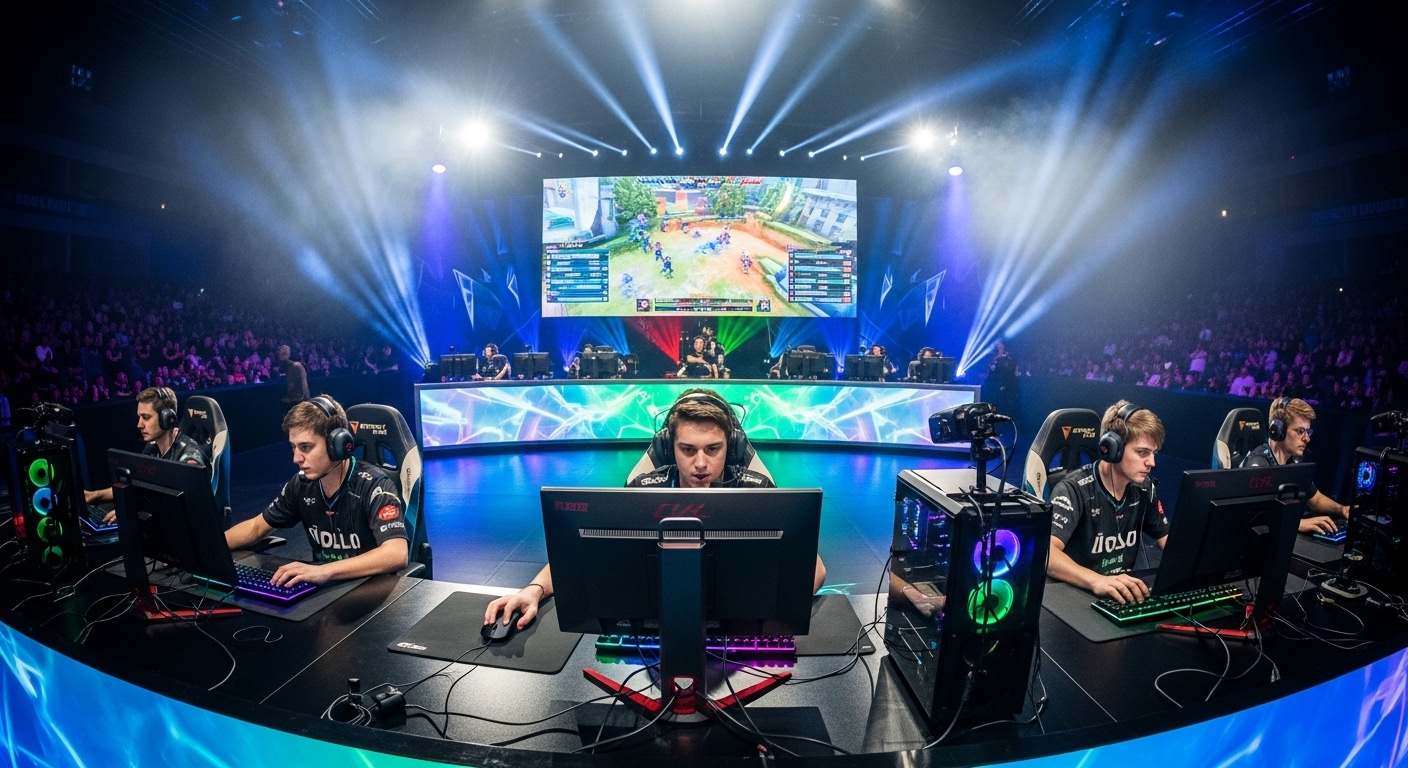
What sets esports apart from casual gaming is the level of skill, strategy, and teamwork required to compete at a high level. Professional esports players undergo rigorous training schedules, much like athletes in traditional sports, to improve their skills, reflexes, and game knowledge. The rise of esports has not only made gaming a viable career path for skilled players but has also transformed gaming into a spectator sport, with millions tuning in to watch tournaments both online and in person.
The Evolution and Growth of Esports
The history of esports dates back to the early days of competitive gaming. In the 1990s, LAN (Local Area Network) parties became popular, where gamers would gather in person to compete in multiplayer games like Doom and Warcraft. However, the first true esports tournaments began to take shape in the late 1990s and early 2000s, with events like the Red Annihilation tournament for Quake in 1997. These early tournaments were relatively small-scale, but they laid the groundwork for the esports phenomenon we see today.
The real turning point for esports came in South Korea, where the country’s internet infrastructure and cultural attitudes toward gaming created a fertile ground for competitive gaming to thrive. The StarCraft game, in particular, became a national obsession, and professional players were treated like celebrities. South Korea’s Proleague, which began in 2003, became one of the first organized esports leagues, with games broadcast on television to millions of viewers.
As internet speeds improved globally and streaming platforms like Twitch emerged, esports began to expand internationally. By the mid-2010s, esports had reached a tipping point, with major companies, including Amazon and Microsoft, investing in the industry. The launch of games like League of Legends (2009) and Dota 2 (2013) further fueled the growth of esports, as these titles featured highly competitive gameplay and supported large-scale tournaments with substantial prize pools.
Esports as a Multi-Billion Dollar Industry
Today, esports is a multi-billion-dollar industry, with its financial ecosystem encompassing sponsorships, media rights, advertising, merchandise, and ticket sales. According to recent estimates, the global esports industry was valued at over $1 billion in 2020 and is projected to grow significantly in the coming years. This growth has been fueled by increased investment from major corporations, such as Intel, Coca-Cola, Red Bull, and Nike, who have seen the potential of esports to reach young, tech-savvy audiences.
Sponsorships are one of the largest revenue streams in esports, with companies paying for advertising opportunities during tournaments and for endorsement deals with popular players and teams. The increasing media rights for esports events are another key driver of growth, as more networks and digital platforms broadcast these tournaments. Platforms like YouTube, Facebook Gaming, and, of course, Twitch, which was acquired by Amazon in 2014, have become primary destinations for esports content, providing live streams of tournaments and offering a space for gaming communities to interact.
Prize pools for major esports tournaments have also skyrocketed in recent years. For example, The International, an annual Dota 2 tournament, has set records for the largest prize pool in esports history, with the 2021 tournament offering over $40 million in prizes. These large prize pools have attracted top-tier players from around the world, further raising the stakes of competitive gaming.
In addition to sponsorships and prize money, esports has also become a hub for merchandising. Fans can buy team jerseys, gaming peripherals, and other esports-related products, further driving revenue for teams and players. Esports has also opened new opportunities for careers in content creation, casting, coaching, and event management, allowing individuals to make a living from their involvement in gaming beyond playing.
Esports and Traditional Sports: A Growing Synergy
As esports continues to grow, it is beginning to bridge the gap between traditional sports and gaming. Many professional sports organizations are investing in esports to engage with younger audiences and expand their brand. For example, traditional sports leagues like the NFL, NBA, and FIFA have launched their own esports leagues, such as the NBA 2K League and the eFootball Pro Evolution Soccer League, where players compete in virtual versions of their respective sports.
These collaborations between esports and traditional sports have brought new visibility to esports and have helped to legitimize competitive gaming as a form of professional sport. In fact, some esports athletes have even started to gain recognition alongside traditional athletes. Esports players like Faker (Lee Sang-hyeok) in League of Legends and s1mple (Oleksandr Kostyliev) in Counter-Strike: Global Offensive have achieved iconic status within their communities, with massive fan followings and sponsorship deals.
Another important aspect of this synergy is the crossover between esports and physical sports. Many esports athletes incorporate fitness routines into their training to improve their reaction times and mental clarity. The need for physical and mental fitness in esports has led to the development of dedicated esports performance centers, where players can train both their gaming skills and their physical endurance.
Moreover, esports has even begun to receive recognition from some traditional sports organizations and educational institutions. In 2018, the Asian Games included esports as a medal event for the first time, signaling growing recognition of competitive gaming as a legitimate sport. Various universities and colleges have also started offering esports scholarships, creating a pathway for young gamers to pursue higher education while honing their skills as professional players.
The Culture and Community of Esports
At the heart of esports is its community. Unlike traditional sports, where fans are often passive spectators, esports allows fans to actively participate in the experience. Online streaming platforms like Twitch have become vibrant spaces for fans to interact with players, coaches, and casters, allowing for real-time conversations and community-building during live streams.
Esports fans are deeply engaged with their favorite games and teams, often forming online communities and fan clubs to discuss strategies, share content, and cheer for their teams. This sense of belonging is a significant part of the esports experience, and it has contributed to the rise of a unique, global esports culture.
The fan culture surrounding esports is also heavily influenced by social media platforms, where players and fans alike share highlights, memes, and commentary. Hashtags related to popular games or tournaments trend worldwide during major esports events, creating a sense of global unity among fans. The accessibility of esports, with its low barrier to entry and online nature, has allowed gaming communities to flourish in a way that traditional sports simply cannot match.
The Future of Esports
The future of esports is incredibly promising. With its growing popularity, expanding revenue streams, and increasing recognition, esports is set to continue its rapid growth. One of the most exciting developments is the increasing integration of virtual reality (VR) and augmented reality (AR) into esports. VR allows for a more immersive gaming experience, while AR can be used to enhance broadcasts with real-time stats, player information, and interactive features.
Furthermore, as esports continues to expand internationally, it will be interesting to see how different regions develop their own esports cultures. While esports has its roots in countries like South Korea and the United States, the rise of esports in regions like China, Europe, and Latin America will further contribute to the global nature of the industry.
The increasing interest from traditional sports organizations and investors, along with the integration of esports into mainstream entertainment, will help solidify esports as a permanent fixture in the world of sports and entertainment.
Conclusion
Esports is no longer just a passing trend—it is a global phenomenon that has transformed the landscape of competitive gaming. With millions of viewers, massive sponsorships, and an ever-growing pool of talented players, esports has become a major force in the world of entertainment. The rise of esports has also created new career opportunities for gamers, content creators, and other professionals, while simultaneously bridging the gap between gaming and traditional sports. As technology continues to advance and the esports community continues to grow, it’s clear that esports will only become more influential in the years to come. Whether you’re a casual gamer or a hardcore esports fan, the future of competitive gaming is brighter than ever.