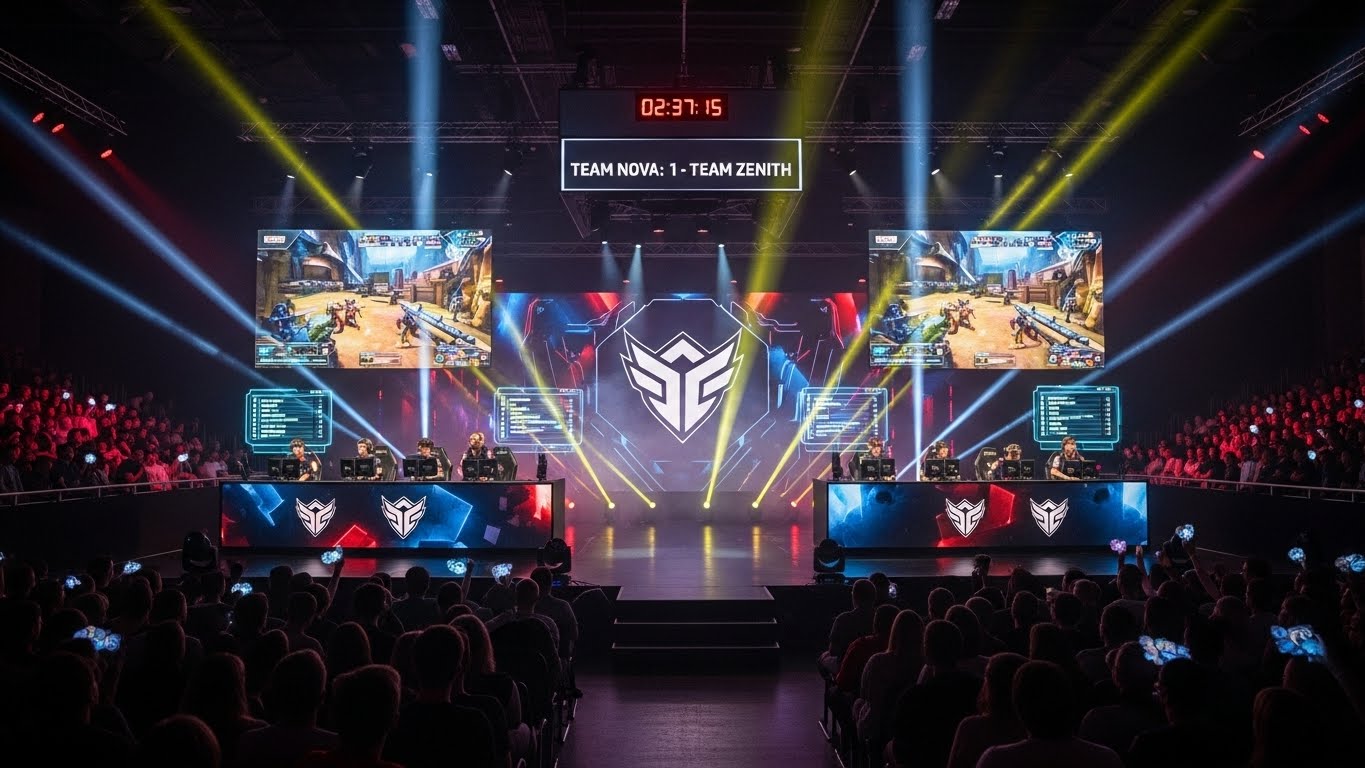
The world of competitive gaming, or esports, has grown from niche communities of enthusiasts into a global phenomenon with millions of players, fans, and professionals. What began as casual gaming among friends has transformed into a multi-billion-dollar industry, influencing culture, technology, and entertainment. Esports is not merely about playing games; it is a professional arena that demands skill, strategy, teamwork, and mental resilience. This article explores the evolution, impact, and future of esports, revealing how it has redefined competition in the digital era.
Understanding Esports: More Than Just Gaming
Esports, short for electronic sports, refers to organized competitive video gaming where individuals or teams compete in specific games at amateur or professional levels. Popular esports titles include multiplayer online battle arena games, first-person shooters, real-time strategy games, and sports simulations. Unlike casual gaming, esports involves structured tournaments, rankings, and professional organizations that support players, coaches, and analysts.
Esports has gained legitimacy through professional leagues, world championships, and sponsorship deals, making it comparable to traditional sports in terms of organization, fan engagement, and media coverage. It challenges conventional notions of competition by emphasizing strategic thinking, precision, teamwork, and mental stamina, proving that the digital arena can be just as demanding as physical sports.
The Growth of Esports: A Global Phenomenon
Over the past decade, esports has experienced exponential growth, both in audience and economic value. Tournaments such as The International, League of Legends World Championship, and the Fortnite World Cup have attracted millions of viewers worldwide, with prize pools reaching tens of millions of dollars. Streaming platforms and online communities have allowed fans to follow players and teams closely, turning individual gamers into global celebrities.
Esports is not confined to any single region. While South Korea and China were early adopters, North America, Europe, Southeast Asia, and Latin America have rapidly embraced competitive gaming. The growth of esports is driven by technology, accessibility, and a cultural shift that recognizes gaming as a legitimate profession. As internet connectivity improves and gaming hardware becomes more affordable, the esports industry is expected to reach even wider audiences in the coming years.
The Professional Esports Ecosystem
The esports ecosystem mirrors traditional sports in many ways, with structured hierarchies, team organizations, coaching, and sponsorships. Professional players train rigorously, often dedicating eight to twelve hours a day to practice, strategy development, and physical conditioning. Teams employ coaches, analysts, nutritionists, and psychologists to ensure optimal performance, highlighting the complexity and professionalism of modern esports.
Sponsorship deals and brand partnerships are vital for financial sustainability in esports. Major companies invest in tournaments, teams, and individual players, recognizing the marketing potential of a dedicated, tech-savvy audience. Streaming platforms provide additional revenue streams through subscriptions, donations, and advertising. This professionalization has transformed esports from a hobby into a viable career path, attracting talent from around the world.
Mental and Cognitive Demands of Esports
Contrary to the misconception that gaming requires minimal effort, esports is mentally and cognitively demanding. Players must make rapid decisions under pressure, maintain focus for extended periods, and anticipate opponents’ strategies. High-level esports competitions often involve complex tactics, split-second reactions, and teamwork, demanding exceptional mental agility and situational awareness.
Esports players also face psychological challenges, including stress, burnout, and performance anxiety. Managing these factors is critical for success, leading to increased attention on mental health within the esports community. Meditation, cognitive training, and counseling are becoming integral parts of professional training programs, demonstrating that success in esports requires not only skill but also mental resilience and emotional balance.
Esports and Technology: Driving Innovation
The rise of esports has fueled advancements in gaming technology, hardware, and software. High-performance computers, graphics cards, gaming peripherals, and high-speed internet are essential for competitive play. Developers continuously update games to balance competition, improve graphics, and enhance player experience. Esports has also popularized new technologies such as virtual reality, augmented reality, and cloud gaming, which are shaping the future of interactive entertainment.
Analytics and data-driven strategies play a crucial role in esports. Teams use performance metrics, heat maps, and in-game statistics to analyze their performance and gain a competitive edge. This reliance on technology has created new career paths in data analysis, game design, broadcasting, and content creation, further diversifying the esports industry.
Community and Cultural Impact
Esports has created vibrant global communities that connect players, fans, and creators. Online forums, social media, and streaming platforms allow people to share strategies, celebrate achievements, and engage with their favorite players. Esports fandom mirrors traditional sports culture, with merchandise, fan clubs, and international events that bring people together across borders.
Esports has also influenced popular culture, inspiring documentaries, movies, music collaborations, and fashion trends. It has provided platforms for creative expression, storytelling, and digital entrepreneurship. More importantly, esports has fostered inclusivity by offering spaces where individuals from diverse backgrounds, genders, and abilities can participate and thrive.
Education and Career Opportunities in Esports
Esports has opened new avenues for education and career development. Many universities now offer scholarships and programs in competitive gaming, game design, and esports management. These programs provide academic training alongside professional skill development, preparing students for careers in a rapidly evolving industry.
Beyond playing professionally, esports careers include coaching, game analysis, event management, content creation, marketing, and broadcasting. The industry also demands technical expertise in software development, networking, and cybersecurity. This broad range of opportunities highlights esports as a multifaceted field that goes beyond entertainment, providing economic and professional growth for millions of individuals worldwide.
Challenges and Controversies in Esports
Despite its rapid growth, esports faces several challenges. Issues such as player burnout, health problems, cheating, and toxicity within gaming communities require ongoing attention. Regulatory frameworks are still evolving, and disputes over contracts, intellectual property, and tournament organization occasionally arise. Gender disparity and representation remain concerns, with efforts underway to create more inclusive environments for female and non-binary players.
Balancing professional commitments with personal life is another challenge for esports players. The demanding schedule of practice, travel, and competition can lead to physical and mental strain. Addressing these challenges is crucial to ensure sustainability, fairness, and well-being within the esports ecosystem.
The Future of Esports
The future of esports looks promising, with continued growth in audience, investment, and global recognition. Emerging technologies like virtual reality, artificial intelligence, and cloud-based gaming are set to revolutionize how competitions are played and consumed. Esports may also see greater integration with traditional sports, education, and entertainment, further blurring the lines between physical and digital competition.
As esports becomes more mainstream, society is beginning to recognize its legitimacy and potential impact. With improved infrastructure, professional standards, and inclusivity initiatives, esports is poised to become an enduring and respected facet of modern culture. The digital arena offers not only excitement and entertainment but also education, community, and opportunity on a global scale.
Conclusion: Esports as a Cultural Revolution
Esports is more than a passing trend; it is a cultural revolution that has transformed the concept of competition, entertainment, and community. From casual gaming to professional leagues, esports demands skill, strategy, and dedication comparable to traditional sports. It has created new economic opportunities, fostered global communities, and challenged societal perceptions of gaming and digital interaction.
The rise of esports demonstrates the evolving relationship between humans and technology, highlighting how digital experiences can be meaningful, competitive, and socially impactful. As audiences grow and technology advances, esports will continue to redefine how we understand sports, leisure, and professional achievement. In the digital age, esports has proven that competition, connection, and creativity can thrive beyond physical boundaries, shaping the future of entertainment and culture.