Introduction:
Not too long ago, video games were seen as a pastime, a form of entertainment meant for children and hobbyists. Parents often warned about “too much screen time,” and the idea that someone could make a career out of gaming was unthinkable. Fast forward to today, and the world of esports has turned that notion upside down.
Esports—short for electronic sports—has evolved into a billion-dollar global industry where professional gamers, coaches, analysts, and production teams come together to compete at the highest level. It’s not just about playing games anymore; it’s about strategy, teamwork, mental endurance, and showmanship.
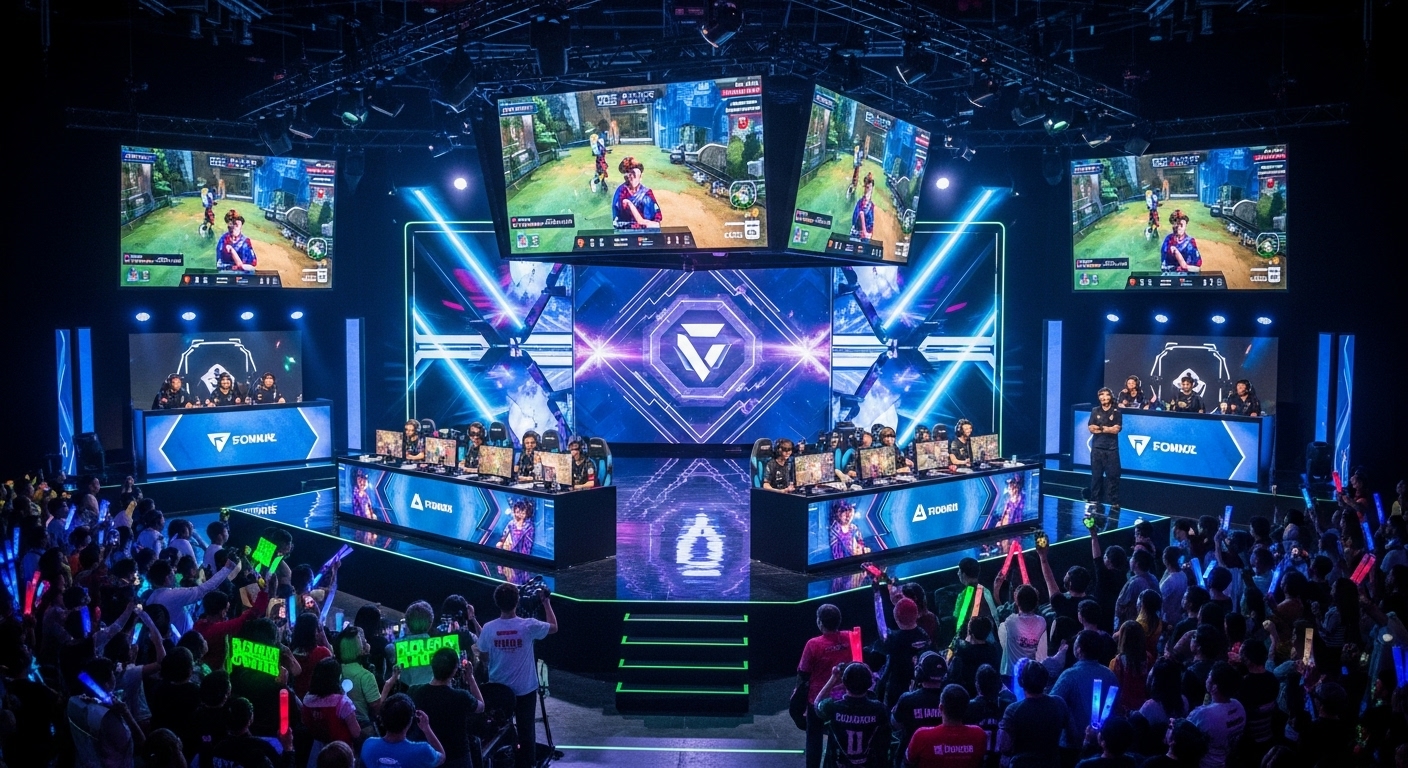
From massive arenas filled with thousands of cheering fans to online broadcasts that attract millions of viewers worldwide, esports has transformed from a subculture into a mainstream phenomenon. But how did it all begin? And what does the future hold for this rapidly expanding universe of digital competition?
The Humble Beginnings of Esports
To understand the scale of esports today, it’s important to appreciate its humble beginnings. The roots of competitive gaming trace back to the late 1970s and early 1980s when arcade games like Space Invaders and Pac-Man captured public imagination.
In 1980, the first major video game competition was held—the Space Invaders Championship, organized by Atari. More than 10,000 participants competed across the United States, marking the beginning of organized video game tournaments.
As technology advanced, home consoles and personal computers became accessible, giving rise to competitive gaming at home. The 1990s saw the birth of multiplayer titles such as Doom and Quake, where players connected over local networks to face off in digital duels.
By the late 1990s, tournaments like the Cyberathlete Professional League (CPL) and QuakeCon laid the foundation for the esports infrastructure we know today. Players were no longer just competing for fun—they were fighting for recognition, sponsorships, and prize money.
The 2000s: Esports Enters the Internet Era
The early 2000s marked a turning point. The widespread availability of broadband internet allowed gamers from different parts of the world to compete in real time. Suddenly, geography was no longer a barrier.
Games like Counter-Strike, StarCraft, and Warcraft III became the backbone of early esports. South Korea, in particular, emerged as a dominant force. The country’s investment in broadband infrastructure and its cultural acceptance of gaming created an ecosystem that nurtured professional gamers. Television channels dedicated to gaming broadcasts became common, and players like Lim “BoxeR” Yo-hwan became national icons.
Meanwhile, Western countries began catching up. Esports organizations, sponsors, and gaming events like DreamHack and World Cyber Games began to flourish. The professionalization of gaming started to take shape—teams had coaches, analysts, and structured practice sessions.
This was the era when esports began to look less like a hobby and more like a sport.
The Explosion of Streaming Platforms
If the 2000s laid the foundation, the 2010s were when esports truly exploded into the mainstream—and streaming platforms were the match that lit the fire.
With the rise of platforms like Twitch, YouTube Gaming, and later Facebook Gaming, esports events became more accessible than ever before. Anyone could tune in from their home to watch professional players compete live. This accessibility democratized esports viewership, connecting global audiences and fostering communities around specific games.
Players who once competed in obscurity suddenly had fan bases rivaling those of traditional athletes. Viewership numbers skyrocketed. Major tournaments for games like League of Legends, Dota 2, and Counter-Strike: Global Offensive began to attract millions of concurrent viewers online.
The appeal wasn’t limited to the matches themselves. Behind-the-scenes content, live commentary, personal streams, and highlights helped fans connect with players on a personal level. Esports personalities became influencers, shaping trends, fashion, and even language within gaming culture.
The Era of Major Titles and Massive Prizes
Some games define eras—and in esports, a few titles have become global pillars.
League of Legends
Released in 2009 by Riot Games, League of Legends revolutionized esports with its structured competitive ecosystem. The annual League of Legends World Championship is one of the most-watched events in the world, often filling massive arenas like the Staples Center or Beijing National Stadium. The production values rival those of traditional sporting events, complete with live music, holographic performances, and millions in prize money.
Dota 2
Valve’s Dota 2 took things to another level with The International, an annual tournament known for its crowd-funded prize pools. In 2021, the total prize exceeded $40 million—a figure that stunned even traditional sports audiences. Teams from across the globe compete for glory, with fans passionately supporting their regions.
Counter-Strike: Global Offensive
CS:GO has maintained its legacy as one of the longest-running esports titles. Its simple premise—terrorists vs. counter-terrorists—belies a deep layer of strategy and precision that rewards skill, communication, and timing. The Majors in CS:GO are among the most anticipated tournaments in the world.
Fortnite and the Mainstream Shift
When Fortnite burst onto the scene, it bridged the gap between casual and professional gaming. The Fortnite World Cup in 2019 awarded a $3 million grand prize to a 16-year-old player, instantly making global headlines. That moment symbolized the cultural shift—gaming wasn’t a niche anymore; it was a career path.
The Role of Technology and Infrastructure
Esports couldn’t have grown to its current scale without advances in technology. High-speed internet, low-latency servers, and powerful gaming hardware have made seamless online competition possible.
The rise of gaming laptops, custom-built PCs, and optimized gaming consoles has leveled the playing field for aspiring pros. Cloud gaming and improved streaming quality have expanded accessibility, allowing players from various economic backgrounds to compete.
Equally important is the production side. Modern esports broadcasts use advanced camera angles, instant replays, augmented reality graphics, and expert commentary to enhance the viewing experience. It’s not just about the game—it’s about the show.
Esports as a Profession
Gone are the days when gaming was considered unproductive. Today, esports offers a variety of career paths beyond just being a professional player.
Players and Teams
Professional players undergo rigorous training schedules similar to traditional athletes. They study opponents, analyze gameplay, and practice for hours each day. Top-tier organizations provide nutritionists, psychologists, and fitness trainers to ensure players perform at their best.
Coaches and Analysts
Behind every successful team is a dedicated support staff. Coaches design strategies, review game footage, and guide team dynamics. Analysts crunch data, examining patterns to gain competitive advantages.
Commentators and Casters
Esports commentary has become an art form. Casters not only explain the action but also inject energy, excitement, and storytelling into each match. The best commentators are celebrated like celebrities within the community.
Event Managers and Production Crews
From lighting and sound design to stage management and audience engagement, esports events require massive logistical planning. Behind the scenes, hundreds of professionals ensure smooth execution.
The Globalization of Esports
One of the most remarkable aspects of esports is its truly global nature. Unlike traditional sports, which often have geographical limitations, esports transcends borders.
Asia remains a powerhouse, with South Korea and China leading in player development and infrastructure. Europe has produced legendary teams in CS:GO, League of Legends, and Dota 2. North America, once seen as a region struggling to keep up, has invested heavily in esports academies and franchised leagues.
Emerging regions like Southeast Asia, Latin America, and the Middle East are now producing top-tier talent. Internet cafés and local tournaments have evolved into national leagues, showcasing the universality of gaming.
The Esports Audience and Culture
The audience driving esports is diverse, passionate, and digitally native. Most fans are between the ages of 16 and 35, making esports a crucial platform for brands targeting younger demographics.
But esports isn’t just about competition—it’s a culture. Memes, fan art, cosplay, and content creation are integral to the experience. Fans build communities on platforms like Discord and Reddit, where discussions, predictions, and fan theories thrive.
Moreover, esports fandom often mirrors traditional sports rivalries. Fans proudly support teams, wear merchandise, and even engage in debates over strategies and players. The emotional investment is real, and the bond between players and fans continues to strengthen.
The Intersection of Esports and Traditional Sports
Interestingly, traditional sports organizations have recognized the growing power of esports. Major franchises like the NBA, NFL, and European football clubs have invested in esports divisions.
Athletes from conventional sports—such as footballers, basketball players, and even F1 drivers—have become esports investors or participants. The COVID-19 pandemic further blurred the lines, as real-world sports turned to virtual alternatives. F1 Esports and NBA 2K tournaments brought together professional athletes and gamers in shared competitions.
This crossover has validated esports in the eyes of mainstream audiences, showing that the skill, dedication, and teamwork required are no less demanding than in physical sports.
The Challenges Facing Esports
Despite its success, esports still faces challenges that must be addressed to ensure sustainable growth.
Player Burnout
The intense practice schedules, travel, and pressure to perform can lead to mental and physical exhaustion. Many players retire at a young age, often before 25, due to stress or injury. Organizations are increasingly prioritizing mental health support to combat this issue.
Financial Stability
While top players earn millions, the majority struggle financially. Prize distribution and sponsorships often favor elite teams, leaving smaller organizations with limited resources. Finding a fair economic model remains a key challenge.
Cheating and Integrity Issues
As in any competitive field, cheating, match-fixing, and use of unauthorized software pose threats to esports integrity. Stronger regulations, anti-cheat systems, and oversight committees are being implemented to protect fairness.
Representation and Diversity
The esports industry has been criticized for its lack of diversity and gender representation. While progress is being made with all-female tournaments and inclusivity programs, there’s still a long way to go toward achieving equal opportunity.
The Educational and Social Impact of Esports
Esports is no longer confined to entertainment—it has entered the educational domain. Many universities around the world now offer scholarships for esports athletes, recognizing gaming as a legitimate sport requiring discipline and strategy.
Courses on esports management, marketing, and event production are becoming increasingly common, preparing students for careers in this expanding industry.
Socially, esports has connected millions across cultures, fostering friendships and collaborations that transcend borders. Online gaming communities have become safe spaces for self-expression and creativity, allowing people to belong and grow.
The Future of Esports
As technology continues to evolve, so too will esports. The integration of virtual reality (VR) and augmented reality (AR) could redefine competitive gaming experiences. Cloud gaming will make high-end play accessible to everyone, regardless of hardware limitations.
Franchise leagues will continue to mature, establishing stable ecosystems with player unions, standardized contracts, and consistent salaries. Esports will likely enter the Olympics in the coming years, bridging the gap between digital and physical sports even further.
Artificial intelligence and data analytics will play greater roles in strategy development, while interactive viewing experiences will make fans active participants rather than passive spectators.
Most importantly, esports will continue to inspire younger generations to dream big—to see gaming not just as entertainment but as an avenue for creativity, competition, and community.
Conclusion: The Game That Never Stops
Esports is more than just a new form of entertainment—it’s a revolution in how we perceive competition, technology, and connection. From small LAN parties in dimly lit rooms to sold-out arenas with global audiences, it has transcended expectations.
It represents a generation that grew up with technology and turned passion into profession. It celebrates teamwork, strategy, and perseverance in a digital age.
The story of esports is still being written, and like any great game, it evolves with every player who joins, every team that rises, and every fan who cheers.
In the end, esports isn’t just about winning or losing—it’s about the spirit of play, the thrill of competition, and the endless possibilities of the virtual world.