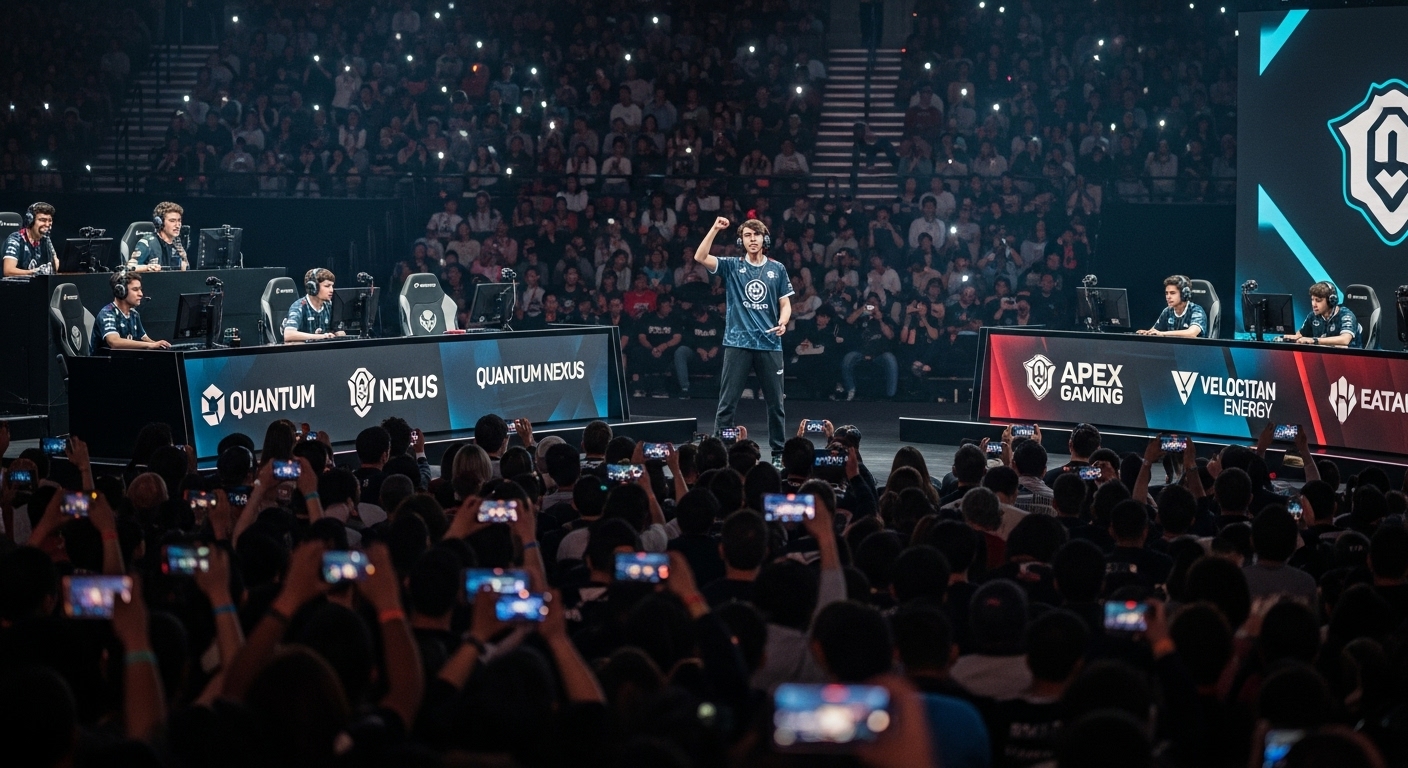
Esports, or electronic sports, has rapidly transformed from a niche activity to a global phenomenon in just a few short decades. What began as casual competitions among friends in the 1990s has grown into a multi-billion-dollar industry, attracting millions of players, fans, and viewers from all corners of the globe. Esports has taken the gaming world by storm, and it is now firmly entrenched in mainstream culture, with professional leagues, major sponsorships, televised events, and even college scholarships. In this blog post, we will explore the rise of esports, what it entails, and the key factors that have driven its exponential growth. We’ll also delve into the world of esports as a career, its impact on gaming culture, and its potential future.
The Origins of Esports: From Arcade Games to Global Competitions
While competitive gaming in some form has existed for decades, esports as we know it today began to take shape in the late 1990s and early 2000s. Early video game competitions were largely informal, with friends and local gaming communities hosting competitions in arcades or small venues. These events were often centered around games like Street Fighter, Super Mario Kart, or Quake—games that allowed for competitive play and sparked interest in competitive gaming.
However, it wasn’t until the late 1990s that esports started to gain a more formal structure. In 1997, the first professional gaming tournament, the Red Annihilation tournament for Quake, was held, and it attracted attention from gamers and the media alike. The winner of this competition, Dennis “Thresh” Fong, became the first professional esports player to achieve mainstream recognition, winning both the tournament and a Ferrari. This was a defining moment in the history of esports, proving that competitive gaming could be more than just a hobby—it could be a serious, lucrative pursuit.
In the early 2000s, esports began to expand further with the introduction of online gaming. Games like StarCraft, Warcraft III, and Counter-Strike helped lay the foundation for modern competitive gaming by providing a platform for players to compete against each other online. These games also introduced the concept of team-based play, which would become central to many esports competitions in the years to come.
The Growth of Esports: From LAN Parties to Global Leagues
As technology improved and internet speeds increased, competitive gaming began to reach a broader audience. The rise of broadband internet allowed players to connect to online servers and compete in large-scale tournaments from the comfort of their homes. The World Cyber Games (WCG), launched in 2000, played a pivotal role in establishing esports as a global phenomenon. The WCG became the first truly international esports competition, bringing together top players from around the world to compete for world titles in various games.
Around the same time, Major League Gaming (MLG) was founded in the United States in 2002, providing a platform for competitive players to compete in professional leagues. MLG tournaments began to attract sponsorships, which was a crucial factor in the growth of esports. The introduction of large-scale tournaments with professional production value, such as DreamHack in Sweden and the Intel Extreme Masters series, helped cement esports as a legitimate form of entertainment. The prize pools for these events grew substantially, often reaching millions of dollars, further legitimizing the competitive gaming scene.
During this period, the rise of League of Legends (LoL) in 2009 marked a turning point for esports. Developed by Riot Games, LoL became the centerpiece of the esports world, with its professional league, the League of Legends Championship Series (LCS), being one of the most-watched esports competitions globally. The game’s success led to the establishment of other major esports titles, including Dota 2, Overwatch, and Counter-Strike: Global Offensive (CS: GO). These games helped to solidify esports as a full-fledged industry, attracting sponsorships from major brands, media partnerships, and an ever-growing fan base.
The Ecosystem of Esports: Teams, Leagues, and Players
The structure of esports today is highly organized, with a complex ecosystem consisting of professional teams, individual players, leagues, tournaments, sponsors, and media companies. At the heart of esports are the professional teams, made up of skilled players who compete in various games across multiple leagues and tournaments.
Professional Esports Teams
Professional esports teams are similar to those in traditional sports, with players acting as athletes who dedicate their time and energy to improving their skills, strategies, and gameplay. These teams often have trainers, coaches, analysts, and support staff to help players reach their full potential. Some of the most prominent esports teams in the world include Team Liquid, Cloud9, SK Telecom T1, and Fnatic. These organizations often compete in multiple games, with some teams fielding players across several titles simultaneously.
The professional esports scene has also introduced a new era of esports stars—players who are not only known for their incredible skill but also for their personalities and streaming presence. Players like Faker (Lee Sang-hyeok), S1mple (Oleksandr Kostyliev), and Ninja (Tyler Blevins) have amassed huge followings both within and outside of the gaming community. Their success on the esports stage has made them icons in the gaming world, and they often serve as brand ambassadors for major gaming companies and sponsors.
Esports Leagues and Tournaments
Esports leagues and tournaments are the backbone of competitive gaming. These events bring together the best players and teams from around the world to compete for glory, recognition, and substantial prize money. The structure of these tournaments varies, with some games featuring annual leagues while others focus on major international competitions.
For example, The International (TI) for Dota 2 is an annual event that draws millions of viewers and boasts the largest prize pool of any esports tournament, often exceeding $40 million. Similarly, The League of Legends World Championship is an annual event that attracts millions of viewers, with the top teams from the LCS, LEC, LCK, and LPL regions battling for the title of world champion. In addition to these high-profile competitions, there are numerous regional tournaments, such as the Overwatch League, which offer players and teams the opportunity to compete for both financial rewards and recognition.
In addition to traditional esports tournaments, the rise of online streaming platforms such as Twitch and YouTube Gaming has given players and fans the opportunity to interact directly. These platforms allow gamers to stream their gameplay, host live competitions, and engage with their audiences, further boosting the popularity of esports. As streaming has become an integral part of the esports ecosystem, it has also contributed to the growth of esports as a spectator sport.
Sponsorships and Media Coverage
Esports has attracted attention from major corporations looking to tap into the gaming audience. Sponsorship deals, which have traditionally been a hallmark of sports organizations, are now a key component of the esports industry. Global brands such as Intel, Coca-Cola, Red Bull, and Mercedes-Benz have all invested heavily in esports, sponsoring tournaments, teams, and events. These sponsorships help fund tournaments, increase visibility, and offer players and teams financial stability.
The media landscape surrounding esports has also evolved. Major broadcasting networks, including ESPN, TBS, and Turner Sports, have aired esports events, while online platforms like Twitch and Facebook Gaming have emerged as dominant players in the streaming space. Esports now has its own dedicated media ecosystem, complete with websites, podcasts, and social media channels that offer live coverage, news, and commentary on the latest tournaments and events.
The Future of Esports: Expanding the Boundaries
The future of esports looks brighter than ever, with the industry continuing to evolve and grow at an astonishing rate. A few key trends are likely to shape the next chapter of esports.
Mainstream Recognition and Traditional Sports Integration
As esports continues to grow, it’s likely that it will become more integrated with traditional sports. Major sports leagues such as the NBA, NFL, and European football clubs have begun to invest in esports, either through team ownership or by establishing their own esports divisions. This integration will help esports gain broader mainstream acceptance and solidify its position as a legitimate form of competitive entertainment.
Additionally, esports is becoming an important part of the curriculum in many educational institutions. Universities and colleges are offering scholarships for talented gamers and developing dedicated esports programs to train the next generation of professionals. This shift towards recognition in academic circles further cements esports as an established part of modern entertainment culture.
New Technologies: Virtual Reality and Artificial Intelligence
The advancement of virtual reality (VR) and augmented reality (AR) technologies could revolutionize esports. These technologies have the potential to create more immersive and interactive gaming experiences, where players can compete in fully realized virtual worlds. Imagine participating in a Counter-Strike match where you’re physically inside the map, or competing in a FIFA tournament with motion capture technology that mirrors your real-life movements. VR and AR could add another layer of immersion and excitement to esports, appealing to both players and spectators alike.
Furthermore, artificial intelligence (AI) could be used to enhance esports training, helping players analyze their gameplay, identify weaknesses, and improve their skills. AI-powered coaching assistants could provide real-time feedback during matches, optimizing performance and helping players reach their full potential.
Expanding the Global Reach of Esports
Esports is already a global industry, but its reach is only continuing to expand. As internet access improves in developing countries, new markets for esports are opening up. For example, esports has grown exponentially in regions like Southeast Asia, Latin America, and the Middle East, where local leagues and tournaments are gaining popularity.